The hot weather finally reached us, but it really wasn't all that unusual other than 90-degree days usually arrive in August, not July. When I was a kid in a previous century, we did not have air conditioning, just fans to sit in front of and hum into. I remember laying on my bed, reading, sweat running into my training bra, but not really feeling uncomfortable. Usually I spent my afternoons at the pool or the library or in the lower level of our split level, watching Cubs games. Now, hot and humid weather leaves me almost comatose. I am so soft.
I've concluded that the unidentified bird I posted a pic of a couple of weeks ago is a juvenile starling. Same general body shape but a bit slimmer, dusky colored instead of black, dark beak instead of yellow, but just as much of an a$$hole as the adults.
As I had hoped, goldfinch have made an appearance in the yard, sometimes at the monarda, sometimes in the sunflower patch. More house finches hang around as well. There are still too many sparrows, though; four immature ones chased away a swallowtail butterfly the other day. Jerks.
My next door neighbor had a tree removed from her backyard, one that hung over her house and lost a branch last summer, damaging the roof and taking out the electricity. Friday night we had a windy storm that dropped a lot of branches in the neighborhood - in fact, I could barely get out of the addition Saturday morning - and I'm guessing she is glad that tree is gone.
Saturday I attended a natural dyeing workshop where most of the dye materials came from the garden by the parking lot. The hibiscus was particularly impressive. And it dyes yarn an impressive color as well.
I talked to the native plant guy who installed my landscape last year. The missing plants will be replaced, per the warranty. He also did not like how the hairy beardtongue (Penstemon hirsutus) looked, flopping over in search of the sun that is blocked by the Japanese maple. So he wants to replace that with something more shade tolerant. I'll move the hairy beardtongue somewhere else - don't want to discard perfectly good plants. All gratis.
A blossom finally appeared on the Buddleia 'Purple Haze'. A couple of aster flowers have popped (too early!) The three clumps of nodding onion out front are at their peak.
After previously complaining about the lack of bugs in my yard, I am disconcerted to find something is biting me out there, something invisible that does not leave a mark. At least there is a chorus of cicadas to remind us that tomorrow August starts.
Enjoy the sounds of summer... while they last.
Monday, July 31, 2023
Saturday, July 22, 2023
Bugs
Sometimes, when the morning light and dew are just right, the invisible becomes visible. In the past, I have found the front lawn completely covered in spider webs. That hasn't happened lately, but the other day, I did find a couple webs in the backyard, evidence that bugs still live on my property.
One blog I follow is called Garden Rant. They recently featured an article by Susan Harris about the Bee Lab, or more precisely the Native Bee Inventory and Monitoring Lab, in the Putuxent Research Refuge, between Baltimore and Washington, D.C. This is the place to go for everything you ever wanted to know about native bees, with links hither and yon. And if you go to Pollinators.org, you can find out what plants and shrubs to plant in *your* area to help native bees.
Of course, I had to check out what my bees like, and sunflowers are one of the best sources of pollen for them. Good thing the local squirrels planted those last fall and I let them go wild this summer. I enjoy this wall of sunflowers so much, I changed the photo at the top of my blog.
I love standing out in the sunflower patch and watching the different bees. I expecially like seeing full pollen sacs.
Interestingly, while milkweed is great for monarchs, it is of no use for bees because the pollen is out of reach for them. And some of the items on the list do not excite me, like iris. But as I adjust the plant population in my yard (I just ordered asters to plant with the goldenrod), I'll keep in mind what the bugs favor.
So far, we have escaped the horrid heat that is tormenting the south and southwest portions of this nation. It looks like our respite will end next weekend, when highs will be in the 90's. Not as horrible as 110, but still a good reason to stay inside. It will also be dry, so I will continue to water the tulip tree, as it hasn't given up yet.
When there is a storm that includes thunder, all four pets hang out with me, as shown below. A short while after this pic was taken, I abandoned them for a safer spot than by the picture window because the tornado siren went off. Fortunately, no local damage occurred.
The yard is still full of birds and their young. The babies haven't figured out that the reflections in the windows are NOT trees and shrubs they can land on. One would think from the number of window hits I hear each day that the yard would be littered with dead birds, but I haven't found any. I think they don't hit with enough force to do any real damage to their fragile little necks.
An aside: While I am very happy that I had my landscape redone last summer, I have to admit that the results are not very showy. Right now, the only things blooming in the front yard are a clump of nodding onion and one butterflyweed plant that the monarch caterpillars didn't destroy last year. Meanwhile, "my" areas, the ones I asked them to not touch, sport monarda (which is fading), ironweed, and rudbeckia on the south side, a sea of hostas plus in the future goldenrod and aster on the north, and honeysuckle vine, daylily, and sunflowers in the back. I can see me adding more perennials over the years because, frankly, I like to look at pretty flowers.
One blog I follow is called Garden Rant. They recently featured an article by Susan Harris about the Bee Lab, or more precisely the Native Bee Inventory and Monitoring Lab, in the Putuxent Research Refuge, between Baltimore and Washington, D.C. This is the place to go for everything you ever wanted to know about native bees, with links hither and yon. And if you go to Pollinators.org, you can find out what plants and shrubs to plant in *your* area to help native bees.
Of course, I had to check out what my bees like, and sunflowers are one of the best sources of pollen for them. Good thing the local squirrels planted those last fall and I let them go wild this summer. I enjoy this wall of sunflowers so much, I changed the photo at the top of my blog.
I love standing out in the sunflower patch and watching the different bees. I expecially like seeing full pollen sacs.
So far, we have escaped the horrid heat that is tormenting the south and southwest portions of this nation. It looks like our respite will end next weekend, when highs will be in the 90's. Not as horrible as 110, but still a good reason to stay inside. It will also be dry, so I will continue to water the tulip tree, as it hasn't given up yet.
When there is a storm that includes thunder, all four pets hang out with me, as shown below. A short while after this pic was taken, I abandoned them for a safer spot than by the picture window because the tornado siren went off. Fortunately, no local damage occurred.
The yard is still full of birds and their young. The babies haven't figured out that the reflections in the windows are NOT trees and shrubs they can land on. One would think from the number of window hits I hear each day that the yard would be littered with dead birds, but I haven't found any. I think they don't hit with enough force to do any real damage to their fragile little necks.
An aside: While I am very happy that I had my landscape redone last summer, I have to admit that the results are not very showy. Right now, the only things blooming in the front yard are a clump of nodding onion and one butterflyweed plant that the monarch caterpillars didn't destroy last year. Meanwhile, "my" areas, the ones I asked them to not touch, sport monarda (which is fading), ironweed, and rudbeckia on the south side, a sea of hostas plus in the future goldenrod and aster on the north, and honeysuckle vine, daylily, and sunflowers in the back. I can see me adding more perennials over the years because, frankly, I like to look at pretty flowers.
Saturday, July 15, 2023
Grrr!
This past week, a sales rep from Greenix rang my doorbell. He rattled off the names of several neighbors who had recently procured his services. When I realized he was an exterminator, I told him that was the opposite of what I want in my yard. It's a granular application, so he claims it does not kill bees. We got stuck on the bee issue, but as it always happens, later I thought of more arguments against his product. One is, without bugs, what are the birds to feed their young? Hummingbirds may dine on nectar, but they feed their babies protein in the form of insects.
Then - and I don't know why solicitors do this - he asked for a bottle of water. I just laughed and said I don't buy bottled water. So in his mind, am I not only a crazy bug lady, I'm a crazy bug environmentalist.
And then I received an email from a fiber friend who helps maintain a colonial garden at one of the local parks. She had bedstraw to give away. The roots of this plant provide nice reds when dyeing yarn, BUT it is also a non-native invasive. No way am I going to introduce that into my yard. I could offer to dig up some roots in the fall, though.
And THEN, while mowing, I found a mousetrap in my yard with a bird leg in it. Who puts mousetraps outside where non-mouse animals and even children can find them? Grrr!
Speaking of birds, does anyone know what kind of bird this is? It looks like a streamlined mourning dove to me, but I can't find any matching photos online.
The rudbeckia and ironweed on the south side of the house was fairly upright this year, until it rained. I keep adding sections of this no-dig fencing to help keep it out of the way, as I have to drive through that area with my mower. I've been adding some fencing to the bed opposite the privacy fence as well, as the milkweed and monarda also flop.
Meanwhile, the summer blooms are starting to pop.
Only a couple of butterflyweed plants survived from last year. I contacted the native plant installer for replacements. He came up with a list of quite a few MIAs. I'm not too concerned that there may be two columbine plants missing, as that plant reseeds itself abundantly. He claims a dozen sedge plants are also gone. He sounds dissatisfied with the overall design and wants to make some changes. We'll see what he comes up with... and how much it will cost.
Then - and I don't know why solicitors do this - he asked for a bottle of water. I just laughed and said I don't buy bottled water. So in his mind, am I not only a crazy bug lady, I'm a crazy bug environmentalist.
And then I received an email from a fiber friend who helps maintain a colonial garden at one of the local parks. She had bedstraw to give away. The roots of this plant provide nice reds when dyeing yarn, BUT it is also a non-native invasive. No way am I going to introduce that into my yard. I could offer to dig up some roots in the fall, though.
And THEN, while mowing, I found a mousetrap in my yard with a bird leg in it. Who puts mousetraps outside where non-mouse animals and even children can find them? Grrr!
Speaking of birds, does anyone know what kind of bird this is? It looks like a streamlined mourning dove to me, but I can't find any matching photos online.
The rudbeckia and ironweed on the south side of the house was fairly upright this year, until it rained. I keep adding sections of this no-dig fencing to help keep it out of the way, as I have to drive through that area with my mower. I've been adding some fencing to the bed opposite the privacy fence as well, as the milkweed and monarda also flop.
Meanwhile, the summer blooms are starting to pop.
![]() |
| Daylily |
![]() |
| Butterflyweed |
![]() |
| Coneflower |
![]() |
| Rudbeckia |
Only a couple of butterflyweed plants survived from last year. I contacted the native plant installer for replacements. He came up with a list of quite a few MIAs. I'm not too concerned that there may be two columbine plants missing, as that plant reseeds itself abundantly. He claims a dozen sedge plants are also gone. He sounds dissatisfied with the overall design and wants to make some changes. We'll see what he comes up with... and how much it will cost.
Labels:
bird,
butterflyweed,
coneflower,
daylily,
fencing,
rudbeckia
Sunday, July 09, 2023
Few bugs anywhere
We enjoyed a picnic, swim, and hike at Metea Park on Independence Day. The pond was a bit shallow despite the recent rain, but I managed to do the breast stroke hither and yon, supported by a couple of pool noodles. (For some reason, I have no buoyancy.) Then we took a hike in the woods. We didn't need the bug spray I brought along, as there were basically no bugs. No mosquitoes, no deer flies, nothing besides a few gnats. I frequently lament the lack of bugs in my yard, especially pollinators, which I blame on lawn treatments, but it looks like it is an area-wide issue? Or not, as mosquitoes found me while I was visiting with the neighbors across the street in their backyard. They also have moles, while I do not. Go figure.
The monarda on the south side of the house has brought out the bees, which I am happy to see.
The common milkweed in the same area is starting to bloom. Smells so sweet! I haven't seen any butterflies to speak of, but those red milkweed beetles are around.
The ironweed is just starting to bloom, so the rudbeckia can't be too far behind.
The blossoms have popped on the Buddleia 'Pink Microchip'. This little shrub likes growing in a container.
Besides the holiday, this week was week two of colorguard camp, so I was again busy chauffeuring my granddaughter. She won an award for being the hardest working "cadet". We watched her perform in the Three Rivers Festival parade yesterday, which marks the end of camp. Whew!
Have a festive week!
| Eastern tiger swallowtail caterpillar at Metea | |
![]() |
| Coral fungus at Metea |
The monarda on the south side of the house has brought out the bees, which I am happy to see.
The common milkweed in the same area is starting to bloom. Smells so sweet! I haven't seen any butterflies to speak of, but those red milkweed beetles are around.
The ironweed is just starting to bloom, so the rudbeckia can't be too far behind.
The blossoms have popped on the Buddleia 'Pink Microchip'. This little shrub likes growing in a container.
Besides the holiday, this week was week two of colorguard camp, so I was again busy chauffeuring my granddaughter. She won an award for being the hardest working "cadet". We watched her perform in the Three Rivers Festival parade yesterday, which marks the end of camp. Whew!
Have a festive week!
Labels:
bees,
butterfly bush,
caterpillar,
fungus,
ironweed,
milkweed
Saturday, July 01, 2023
Nothing like a good rain
Last Sunday, we received 1.75" of rainfall, then another 0.25" on Monday. Just what all the plants needed. I've been watering through the dry spells, but there is some kind of magic in actual rain.
Just as I hoped/predicted last week, a few things are blooming. There is one blossom on one of the potted butterfly bushes, but more are on their way. The honeysuckle vine has been blooming all along, but after that rain, it really popped.
And the menarda is joining the pretty party.
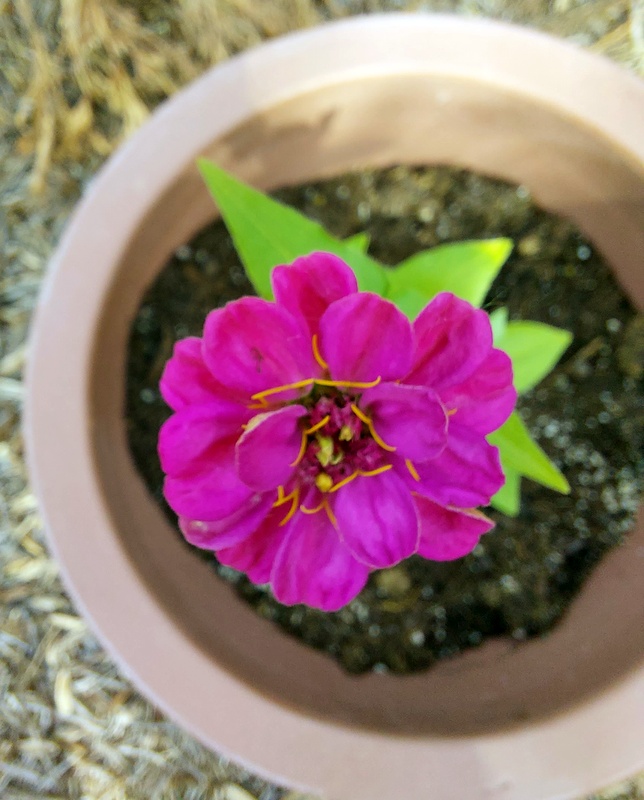
The zinnias (my favorite annual) are in pots, but that didn't discourage them from expanding their blossom count after the rain.
My dream of green beans is off to a slow start, but at least I will have tomatoes.
All that moisture has also brought out the fungi. These little guys are popping up all over the yard.
Every year volunteer sunflowers emerge, thanks to the bird feeders. This year is no exception, but what is unusual are the clusters of sunflowers, presumably the result of chipmunks or squirrels burying mouthsful of seeds. I've been letting them grow, as I'm hoping it will attract the goldfinch that seem to be MIA this year.
Speaking of birds, there are baby bluebirds in the nesting box. Squeee! When mom or dad come to feed them, they chirp, chirp, chirp. Sparrows are nesting in the Goodwill sign.
The rainfall revealed that some of my gutters were plugged up, so I tackled that chore this past week. My dad lived in his house into his 90's by slowly outsourcing chores, from snow removal to housecleaning. I think gutter cleaning may be my first chore to be outsourced. At least, my new shoulders can now haul the ladders around.
Due to the wildfires in Canada, the air quality has been rather poor this past week, so I spent a lot of time inside. This is also week one of colorguard camp for my granddaughter, and I've been helping with transportation. And then there are the fireworks, which my dogs hate; they want out to chase the squirrels, then frantically scratch at the patio door to be let back in when one of those big booming ones is set off. Keeps me hopping.
Have an independent week!
Just as I hoped/predicted last week, a few things are blooming. There is one blossom on one of the potted butterfly bushes, but more are on their way. The honeysuckle vine has been blooming all along, but after that rain, it really popped.
And the menarda is joining the pretty party.
The zinnias (my favorite annual) are in pots, but that didn't discourage them from expanding their blossom count after the rain.
My dream of green beans is off to a slow start, but at least I will have tomatoes.
All that moisture has also brought out the fungi. These little guys are popping up all over the yard.
Every year volunteer sunflowers emerge, thanks to the bird feeders. This year is no exception, but what is unusual are the clusters of sunflowers, presumably the result of chipmunks or squirrels burying mouthsful of seeds. I've been letting them grow, as I'm hoping it will attract the goldfinch that seem to be MIA this year.
Speaking of birds, there are baby bluebirds in the nesting box. Squeee! When mom or dad come to feed them, they chirp, chirp, chirp. Sparrows are nesting in the Goodwill sign.
The rainfall revealed that some of my gutters were plugged up, so I tackled that chore this past week. My dad lived in his house into his 90's by slowly outsourcing chores, from snow removal to housecleaning. I think gutter cleaning may be my first chore to be outsourced. At least, my new shoulders can now haul the ladders around.
Due to the wildfires in Canada, the air quality has been rather poor this past week, so I spent a lot of time inside. This is also week one of colorguard camp for my granddaughter, and I've been helping with transportation. And then there are the fireworks, which my dogs hate; they want out to chase the squirrels, then frantically scratch at the patio door to be let back in when one of those big booming ones is set off. Keeps me hopping.
Have an independent week!
Labels:
bee balm,
fungus,
honeysuckle vine,
tomato,
zinnia
Saturday, June 24, 2023
If I had a yucca...
As I drive around town, I see that others have blooms in their yards: yucca, daylily, what I call ditch lilies, etc. My yucca is gone (despite its efforts to the contrary), my ditch lilies have not even sent up flower stems yet (probably because they don't get much sun), and ditto the last remaining daylily. Many plants are on the verge, though. Maybe next week?
The rudbeckia and aster on the south side of the house are much more upright than last year, although there are a few floppers. I erected some no-dig fencing from Menards to help out. I think there is ironweed there, too, but I'm not very good at identifying natives before they bloom.
On the north side of the house, across from a sea of hosta (another almost bloomer), I installed nine or so 'Solidago Fireworks' goldenrod. The plants are from Bluestone Perennials, purchased during their end-of-season sale, and despite the late date, arrived looking healthy and rarin' to go.
Otherwise, I've been in maintenance mode: hand-weeding and spraying weeds. The pokeweed, trumpet vine, something I call sticker grass, poison ivy, etc. just will not stop trying to stage a comeback. There's northern sea oats growing where I don't want it, too. And tree of heaven and mulberry. The list goes on. Ugh.
Also, I watch birds. The immature ones are a hoot. The baby wrens have flown their nest. And the bluebird box is occupied.. by bluebirds! In the past, all I got in my bluebird box were sparrows, but they don't like this box, as it is deeper and lets in more light than they like. A similar model has a bar across the entrance, to discourage starlings, but I didn't see any show an interest in this box.
Then there was this pair of robins, sitting in the mulch, feathers fluffed out, heads thrown back, beaks hanging open. They looked like they were sunbathing. I assume their posture has something to do with parasites. (Some day I will get that new camera, maybe with a zoom lens, so I can take photos from across the yard.)
The tulip tree doesn't look any better, and perhaps is no worse? I've been watering it, just in case that helps. I've been watering everything that is new, a regular evening chore. The weather people keep promising us rain, but so far, they've been wrong. Maybe tomorrow?
At least the dry weather made for a pleasant trip to the county fair. My SO and I took my granddaughter and two of her friends. I didn't make them go up and down *every* aisle in the animal barns, but we watched enough of the horseback riding event that they grew bored. I later took them to a city park so they could go for a run. (They are all three on the cross country team at their school.)
The county fair was scheduled earlier than in the past, because the state fair dates had been moved up; I think it caught some folks unaware, as things seemed a bit skimpy. Of course, it may just be me, as last year's fair was really packed with post-pandemic excitement. I planned to go off diet and indulge in onion rings and a root beer float, but there was no root beer float vender. I did get some onion rings, but they were too greasy to finish. Very expensive food waste. :-(
I used to make a dish I called Chicken Surprise. The surprise was it wasn't chicken; it was rabbit.
Have a surprising week!
The rudbeckia and aster on the south side of the house are much more upright than last year, although there are a few floppers. I erected some no-dig fencing from Menards to help out. I think there is ironweed there, too, but I'm not very good at identifying natives before they bloom.
On the north side of the house, across from a sea of hosta (another almost bloomer), I installed nine or so 'Solidago Fireworks' goldenrod. The plants are from Bluestone Perennials, purchased during their end-of-season sale, and despite the late date, arrived looking healthy and rarin' to go.
Otherwise, I've been in maintenance mode: hand-weeding and spraying weeds. The pokeweed, trumpet vine, something I call sticker grass, poison ivy, etc. just will not stop trying to stage a comeback. There's northern sea oats growing where I don't want it, too. And tree of heaven and mulberry. The list goes on. Ugh.
Also, I watch birds. The immature ones are a hoot. The baby wrens have flown their nest. And the bluebird box is occupied.. by bluebirds! In the past, all I got in my bluebird box were sparrows, but they don't like this box, as it is deeper and lets in more light than they like. A similar model has a bar across the entrance, to discourage starlings, but I didn't see any show an interest in this box.
Then there was this pair of robins, sitting in the mulch, feathers fluffed out, heads thrown back, beaks hanging open. They looked like they were sunbathing. I assume their posture has something to do with parasites. (Some day I will get that new camera, maybe with a zoom lens, so I can take photos from across the yard.)
The tulip tree doesn't look any better, and perhaps is no worse? I've been watering it, just in case that helps. I've been watering everything that is new, a regular evening chore. The weather people keep promising us rain, but so far, they've been wrong. Maybe tomorrow?
At least the dry weather made for a pleasant trip to the county fair. My SO and I took my granddaughter and two of her friends. I didn't make them go up and down *every* aisle in the animal barns, but we watched enough of the horseback riding event that they grew bored. I later took them to a city park so they could go for a run. (They are all three on the cross country team at their school.)
![]() |
| Siesta time |
The county fair was scheduled earlier than in the past, because the state fair dates had been moved up; I think it caught some folks unaware, as things seemed a bit skimpy. Of course, it may just be me, as last year's fair was really packed with post-pandemic excitement. I planned to go off diet and indulge in onion rings and a root beer float, but there was no root beer float vender. I did get some onion rings, but they were too greasy to finish. Very expensive food waste. :-(
![]() |
| In case you forget where your meat comes from |
I used to make a dish I called Chicken Surprise. The surprise was it wasn't chicken; it was rabbit.
Have a surprising week!
Saturday, June 17, 2023
Backyard habitat
That's how I think of my backyard: as a habitat for wildlife. I'm sure the wildlife find it wanting at times, especially when the dogs are keeping an eye on things, but without the dogs, it might be overrun by rabbits, squirrels, and opossums.
This joey popped up in the yard the other night; I was able to get a pic between its bouts of playing dead. Only later did I notice that the creature's back leg looks injured. I hope my dogs did not inflict the injury. The guy crawled into the drain pipe from the downspout for temporary protection; I assume it left during the night.
For some reason, I get a kick out of this series of photos:
I thought the male wren at the house in the backyard had not found a mate because all he seemed to do was sing. Well, I was wrong, as there are screaming babies in the nest now. Such little birds, such big voices! And a couple seems to be moving into the wren house in the front yard.
This is the time of the year when not much is blooming other than one viburnum. Even the few annuals I planted are not very enthusiastic. We did get an inch of rain last Tuesday, which was very welcome, but now we are in another dry stretch. At least I don't have to mow much, which leaves more time for hand-weeding and spraying.
This joey popped up in the yard the other night; I was able to get a pic between its bouts of playing dead. Only later did I notice that the creature's back leg looks injured. I hope my dogs did not inflict the injury. The guy crawled into the drain pipe from the downspout for temporary protection; I assume it left during the night.
For some reason, I get a kick out of this series of photos:
I thought the male wren at the house in the backyard had not found a mate because all he seemed to do was sing. Well, I was wrong, as there are screaming babies in the nest now. Such little birds, such big voices! And a couple seems to be moving into the wren house in the front yard.
This is the time of the year when not much is blooming other than one viburnum. Even the few annuals I planted are not very enthusiastic. We did get an inch of rain last Tuesday, which was very welcome, but now we are in another dry stretch. At least I don't have to mow much, which leaves more time for hand-weeding and spraying.
Saturday, June 10, 2023
A visit from an arborist
The arborist from Mudrack Tree Service stopped by this past week, to take a look at the tulip tree. Jeff said there appears to be no disease or infestation, so he suggested we wait and see, and if it is still alive in the fall, fertilize. He also took a look at the redbud tree. The center limb is dying, which happens. He said his mother has a redbud that has been dying for twenty years, so I'm not too worried about it.
We discussed root structure. The tulip tree's roots mimic the top growth in size and shape, but that is for stability. The feeder roots are in the top eight inches of soil. I wish I had thought to ask him if he thought the rain garden and/or mulch was impacting the tree. Yesterday, I raked some of the mulch off, but there really isn't that much there. Jeff said tulip trees tolerate wet (but not hot and dry, which may cause it to drop leaves), so the backyard moisture should not be an issue. But maybe the digging of the rain garden destroyed too many of the feeder roots? I have another arborist coming, for a second opinion; hopefully, I'll remember to ask him.
I confess I wanted the arborist to admire my other trees, especially the elm. We did take a look at the galls on the leaves, which he says are harmless. Another bit of interesting information is, if a tree has borers, woodpeckers go after them, leaving a ring of holes around the trunk.
Despite a bit of rain on Tuesday, it's been so dry lately that I haven't tried to transplant any of my existing perennials. However, the golden rod I ordered from Bluestone Perennials arrived yesterday, so I prepared a bed for them while they harden off. Then I got the bright idea to move the rhubarb from its container (where it was very unhappy) into the end of that bed. I hope it gets enough sun there.
The 'Blue Muffin' viburnum finished blooming, so now it is 'Chicago Lustre' putting on a show. The "sleeping" catmint in the front yard is blooming a bit; next year it should "creep", then third year "leap". The privet behind my backyard is blooming and smells heavenly.
Robins have been feasting on the serviceberry fruit and the neighbor's mulberry (which I wish he would cut down). An immature bluebird figured out how to get into the mealworm feeder, but couldn't get out; Bird Lady to the rescue! I'm about ready to give up on the hummingbird feeder, as I've seen none since that first one about a month ago. On the other hand, redwing blackbirds and grackles frequent the feeders, something that is different from previous years. I wonder how much the reconfiguration of the yard affects which birds frequent it.
The bed on the south side of the house gets very little rain because of the depth of the eave. So I got the bright idea to install a perforated drain pipe there. Yesterday I wrestled around with that, then used the garden hose to mimic a downpour. NOT a success, because the pipe is too big and there is not enough drop for the water to run to the other end. I tried a perforated garden hose before, with water from the well, but the iron in the water clogged up the holes (and where it didn't, the water hit the siding, turning it orange). I'll either have to modify my plan or come up with a new one. Suggestions welcome!
We discussed root structure. The tulip tree's roots mimic the top growth in size and shape, but that is for stability. The feeder roots are in the top eight inches of soil. I wish I had thought to ask him if he thought the rain garden and/or mulch was impacting the tree. Yesterday, I raked some of the mulch off, but there really isn't that much there. Jeff said tulip trees tolerate wet (but not hot and dry, which may cause it to drop leaves), so the backyard moisture should not be an issue. But maybe the digging of the rain garden destroyed too many of the feeder roots? I have another arborist coming, for a second opinion; hopefully, I'll remember to ask him.
I confess I wanted the arborist to admire my other trees, especially the elm. We did take a look at the galls on the leaves, which he says are harmless. Another bit of interesting information is, if a tree has borers, woodpeckers go after them, leaving a ring of holes around the trunk.
![]() |
| Galls on elm leaf |
Despite a bit of rain on Tuesday, it's been so dry lately that I haven't tried to transplant any of my existing perennials. However, the golden rod I ordered from Bluestone Perennials arrived yesterday, so I prepared a bed for them while they harden off. Then I got the bright idea to move the rhubarb from its container (where it was very unhappy) into the end of that bed. I hope it gets enough sun there.
The 'Blue Muffin' viburnum finished blooming, so now it is 'Chicago Lustre' putting on a show. The "sleeping" catmint in the front yard is blooming a bit; next year it should "creep", then third year "leap". The privet behind my backyard is blooming and smells heavenly.
![]() |
| Volunteer wheat |
Robins have been feasting on the serviceberry fruit and the neighbor's mulberry (which I wish he would cut down). An immature bluebird figured out how to get into the mealworm feeder, but couldn't get out; Bird Lady to the rescue! I'm about ready to give up on the hummingbird feeder, as I've seen none since that first one about a month ago. On the other hand, redwing blackbirds and grackles frequent the feeders, something that is different from previous years. I wonder how much the reconfiguration of the yard affects which birds frequent it.
![]() |
| Immature bluebird |
The bed on the south side of the house gets very little rain because of the depth of the eave. So I got the bright idea to install a perforated drain pipe there. Yesterday I wrestled around with that, then used the garden hose to mimic a downpour. NOT a success, because the pipe is too big and there is not enough drop for the water to run to the other end. I tried a perforated garden hose before, with water from the well, but the iron in the water clogged up the holes (and where it didn't, the water hit the siding, turning it orange). I'll either have to modify my plan or come up with a new one. Suggestions welcome!
Saturday, June 03, 2023
Baby birds
The fledglings are everywhere. I've seen baby sparrows, starlings (which are VERY noisy), mourning doves, and bluebirds. Even though the young 'uns are almost as big as their parents, usually their coloring is a bit different and flying takes a lot more effort, as does sticking the landing. Fun to watch.
As promised last time, I transplanted the basil, tomato, and sweet potato vine plants to containers. I also transplanted some penstemon from a large container to the ground, as it had become too crowded to bloom. It's been hot and dry, so everything gets watered every day; the ninebark shrubs get a big drink when they start looking droopy.
I'm SO GLAD I had the landscaping redone last year. Maintaining it is now relatively easy. Every couple of weeks, I do some hand weeding, then treat the pernicious ones with herbicide. It's amazing what keeps trying to come back every year: burdock, trumpet vine, spearmint, forsithia, poison ivy, tree of heaven (should be called tree from hell - read about it here), etc. Very persistant.
One of the redbud trees is not looking its best. From one angle, it seems fine, but from another, not so much. I have some arborists coming to look at the tulip tree, so I'll ask about the redbud as well.
I discovered some calico scale on one of the witchhazel shrubs. Not sure if I should be worried about that.
On a positive note, here is a bee in the penstemon planted last year. It crawls all the way into the blossom in its pursuit of pollen.
Other current bloomers include the climbing rose that I periodically threaten to eliminate.
And columbine.
Flamingos are my thing, so I could not resist this patriotic trio from Menards. I'm sure some of my neighbors don't approve, but that's the point.
Otherwise, I have been busy with my summer job: chauffeuring my granddaughter hither and yon (this week, it was basketball camp). The heat has kept me mostly inside. Next week promises to be milder, although still no rain in the forecast.
As promised last time, I transplanted the basil, tomato, and sweet potato vine plants to containers. I also transplanted some penstemon from a large container to the ground, as it had become too crowded to bloom. It's been hot and dry, so everything gets watered every day; the ninebark shrubs get a big drink when they start looking droopy.
I'm SO GLAD I had the landscaping redone last year. Maintaining it is now relatively easy. Every couple of weeks, I do some hand weeding, then treat the pernicious ones with herbicide. It's amazing what keeps trying to come back every year: burdock, trumpet vine, spearmint, forsithia, poison ivy, tree of heaven (should be called tree from hell - read about it here), etc. Very persistant.
One of the redbud trees is not looking its best. From one angle, it seems fine, but from another, not so much. I have some arborists coming to look at the tulip tree, so I'll ask about the redbud as well.
I discovered some calico scale on one of the witchhazel shrubs. Not sure if I should be worried about that.
On a positive note, here is a bee in the penstemon planted last year. It crawls all the way into the blossom in its pursuit of pollen.
Other current bloomers include the climbing rose that I periodically threaten to eliminate.
And columbine.
Flamingos are my thing, so I could not resist this patriotic trio from Menards. I'm sure some of my neighbors don't approve, but that's the point.
Otherwise, I have been busy with my summer job: chauffeuring my granddaughter hither and yon (this week, it was basketball camp). The heat has kept me mostly inside. Next week promises to be milder, although still no rain in the forecast.
Saturday, May 27, 2023
Tale of two trees
I'm worried about my tulip tree. It is not leafing out like it should by now. It's location is near where the pagoda dogwood died, but it's root structure is supposed to be similar in size and shape as its above ground growth. It's been here since 2009, so one would think it would be permanently established by now. I've had other trees with bad years that later recovered, but I am beginning to lose hope on this one. Maybe a tree expert can help?
Meanwhile, the little hickory tree looks GREAT, very leafy. It has a tap root that hopefully can penetrate my awful clay soil, so I'm hoping it lives a long time. But then, I hope that for all my trees. And shrubs. And perennials.
Most of the spring flowers are gone, but the early summer ones are taking their place. I whacked the honeysuckle vine several months ago, but it blooms on undaunted. It attracts hummingbirds and will bloom most of the season. The two new ones are still getting established.
Even the zinnia transplants are getting into the game.
And, of course, there are bugs, although not too many yet. This week is starting out cool, but hot days are promised later on. And dry. I think we are having a (hopefully) mini drought.
I cut down the rest of the ragwort, so now I can address the weeds that are trying to get a foothold in those beds. The grass seed I planted on the north side of the yard (some of which got flooded, some of which got ignored for a while) is taking root. I've been hardening off the sweet potato vines and tomato plants, so will transplant them today.
Watson, a.k.a. Houdini, almost managed to crawl under the shed, presumably in pursuit of a rabbit. If he had gotten under there, I doubt he could have gotten out by himself, nor could I have been able to rescue him. Who does one call in such a situation? Animal Control? The fire department? I stacked some broken pavers at his access point, so hopefully I won't have to figure that problem out. Then I caught him eating potting soil from one of the zinnia pots. WTH?
My hummingbird feeder broke, so I purchased a simple one from Wild Birds Unlimited. Even though I saw one hummingbird several weeks ago, none have been by since. Ditto the oriole feeder and bluebird box. Plenty of starlings, though. :-(
I tried out the Ego trimmer. It does a fine job, and is very balanced, but it's a bit heavy; my left bicep cramped up after a while. At least, I don't have to wrestle with a long extension cord anymore.
And now I think I'll get to those tomato plants.
![]() |
| Redbud branches on the left, tulip tree branches on the right |
Meanwhile, the little hickory tree looks GREAT, very leafy. It has a tap root that hopefully can penetrate my awful clay soil, so I'm hoping it lives a long time. But then, I hope that for all my trees. And shrubs. And perennials.
![]() |
| The leaves look droopy, but it's fine |
Most of the spring flowers are gone, but the early summer ones are taking their place. I whacked the honeysuckle vine several months ago, but it blooms on undaunted. It attracts hummingbirds and will bloom most of the season. The two new ones are still getting established.
![]() |
| Close up of honeysuckle vine blossoms |
Even the zinnia transplants are getting into the game.
![]() |
| First zinnia bloom of the season |
And, of course, there are bugs, although not too many yet. This week is starting out cool, but hot days are promised later on. And dry. I think we are having a (hopefully) mini drought.
![]() |
| It looks like a flying ant |
I cut down the rest of the ragwort, so now I can address the weeds that are trying to get a foothold in those beds. The grass seed I planted on the north side of the yard (some of which got flooded, some of which got ignored for a while) is taking root. I've been hardening off the sweet potato vines and tomato plants, so will transplant them today.
Watson, a.k.a. Houdini, almost managed to crawl under the shed, presumably in pursuit of a rabbit. If he had gotten under there, I doubt he could have gotten out by himself, nor could I have been able to rescue him. Who does one call in such a situation? Animal Control? The fire department? I stacked some broken pavers at his access point, so hopefully I won't have to figure that problem out. Then I caught him eating potting soil from one of the zinnia pots. WTH?
My hummingbird feeder broke, so I purchased a simple one from Wild Birds Unlimited. Even though I saw one hummingbird several weeks ago, none have been by since. Ditto the oriole feeder and bluebird box. Plenty of starlings, though. :-(
I tried out the Ego trimmer. It does a fine job, and is very balanced, but it's a bit heavy; my left bicep cramped up after a while. At least, I don't have to wrestle with a long extension cord anymore.
And now I think I'll get to those tomato plants.
Labels:
hickory,
honeysuckle vine,
insects,
tulip tree,
zinnia
Saturday, May 20, 2023
Birds and butterflies
The New York Times (I'm a subscriber) is sponsoring a bird watching thing with the Cornell Lab of Orthinology. I signed up (and am having trouble logging into their eBird app) so I can report what I see in my backyard. Most of the birds I see are common for this area, with the exception of migrants passing through. But I do observe interesting behaviors once in a while.
While no one has moved into the bluebird box, I did see three male bluebirds duking it out on the roof of the garden shed. Two of them really got into it, slid off the roof and onto the ground without breaking apart. Two male cardinals were also challenging each other. In other activity, I witnessed the male wren chase off a sparrow that got too close to the wren house, pecking him on the head. Nesting time must bring out the aggression in all these guys.
Other observations: robins will chase away starlings, bluebirds will cede the mealworm feeder to sparrows, the bluejays are more interested in peanut splits these days than whole peanuts. I'm sure my observations are not unique, but it is a fun hobby.
Despite the chilly weather, a few hardy butterflies have flown through the yard: a swallowtail, a cabbage white, something I can't identify, and this red admiral.
The coneflower plants and rudbeckia goldsturm are in the ground now. I put the coneflower in the last raised bed, which is L-shaped; the rudbeckia went into the L's inner corner. Both are behind the fencing around the birdfeeders, so no dogs can trample them. All that is left are container plants... except for the perennials on the south side of the house that I may move to the birdfeeder area, depending on how much digging I want to do.
While the redbud didn't bloom very profusely this year, the flowering crab and now the hawthorn have made up for their under performance.
And one of the catmint varieties is trying to add more color to the front yard.
The Ego trimmer is assembled and charged, but I have yet to use it. More of the ragwort has been cut back, primarily so the flowers behind it - wild geranium, blue star, and columbine - are more visible.
I bought top soil to help shore up the berm around the rain garden, just have to get to it. The rhubarb that I put in a container isn't very happy, so I'm contemplating planting it along the edge of the rain garden. About 0.75" of rain fell last night, so that clay soil should be more amenable to being disturbed.
And that is the week that was.
While no one has moved into the bluebird box, I did see three male bluebirds duking it out on the roof of the garden shed. Two of them really got into it, slid off the roof and onto the ground without breaking apart. Two male cardinals were also challenging each other. In other activity, I witnessed the male wren chase off a sparrow that got too close to the wren house, pecking him on the head. Nesting time must bring out the aggression in all these guys.
Other observations: robins will chase away starlings, bluebirds will cede the mealworm feeder to sparrows, the bluejays are more interested in peanut splits these days than whole peanuts. I'm sure my observations are not unique, but it is a fun hobby.
![]() |
| Female cardinal |
Despite the chilly weather, a few hardy butterflies have flown through the yard: a swallowtail, a cabbage white, something I can't identify, and this red admiral.
![]() |
| Red admiral |
The coneflower plants and rudbeckia goldsturm are in the ground now. I put the coneflower in the last raised bed, which is L-shaped; the rudbeckia went into the L's inner corner. Both are behind the fencing around the birdfeeders, so no dogs can trample them. All that is left are container plants... except for the perennials on the south side of the house that I may move to the birdfeeder area, depending on how much digging I want to do.
While the redbud didn't bloom very profusely this year, the flowering crab and now the hawthorn have made up for their under performance.
![]() |
| Hawthorn |
And one of the catmint varieties is trying to add more color to the front yard.
![]() |
| Cat's Pajamas |
The Ego trimmer is assembled and charged, but I have yet to use it. More of the ragwort has been cut back, primarily so the flowers behind it - wild geranium, blue star, and columbine - are more visible.
I bought top soil to help shore up the berm around the rain garden, just have to get to it. The rhubarb that I put in a container isn't very happy, so I'm contemplating planting it along the edge of the rain garden. About 0.75" of rain fell last night, so that clay soil should be more amenable to being disturbed.
And that is the week that was.
Subscribe to:
Posts (Atom)