I spent half the day outside, doing fall-like things like mowing the leaves (and using my zero-turn mower to direct them around the trees) and raking the deck (decomposing leaves not only stain the deck but make it slick). Not all the leaves have fallen yet, so I expect a repeat performance in a week or so.
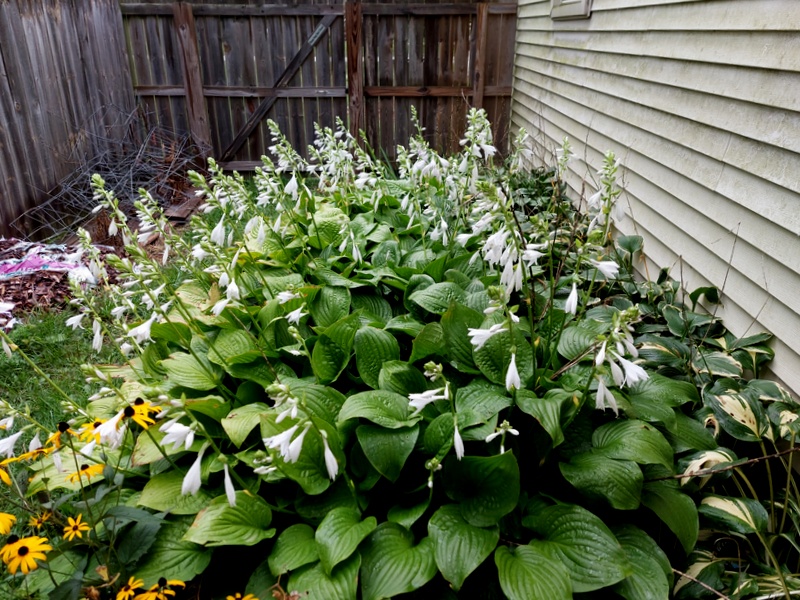
The two showiest plants right now are the blooming witch-hazel and the berry-ful winterberry holly.
I am looking forward to a snowy winter to provide even more contrast to the red fruit.
Occasionally, I think about replacing one or more of my aging area rugs, but then a cat pukes on one. Ditto this dog damage. I could have that corner piece of siding replaced, but Clio might just claw it apart again. I have a list of things to do when I am petfree (if that ever happens).
I've been seeing quite a few robins lately, which makes me realize I have *not* seen many lately. They scrounge around in the mulch, presumably finding worms? They must not be a caching species, along with the starlings.
We have had a couple of frosty mornings, but the weeds are still green, so I sprayed them today. That will be the last weed-killing spree of the season, me thinks.
Have a spooky Halloween.
Sunday, October 30, 2022
Sunday, October 23, 2022
Wish fulfilled
My SO wants to buy me stuff, a habit I try to snuff since I already have everything I need or want. BUT I did mention in my last post that I needed an insect identification book. Voila!
I've already used it to identify two bugs: a yellow garden spider (Argiope aurantia) a friend posted on IG and the dingy cutworm caterpillar moth (Felita jaculifera) from my last post. Too bad the season for creepy crawlies is about over.
One of my witch-hazels is starting to bloom, the oldest one, while the four newbies, which are nearly as big, have not joined the party. If I hadn't been puttering in the yard, I might not have noticed.
Otherwise, not much going on in the yard plantwise. The hickory tree has lost all its leaves, so it looks rather bare, but the rest of the trees are still clinging to theirs despite windy day after windy day.
Birdwise, there is a LOT of activity, as they are in caching mode, gathering and hiding nuts and seeds for the winter. I bet there are at least 100 sparrows frequenting the feeders, plus a few other winter hardy species. I've seen flocks of starlings around town, but they must be grasshoppers, not ants, and hope to find their winter food catch as catch can. No wonder they are such gluttons come January.
I've already used it to identify two bugs: a yellow garden spider (Argiope aurantia) a friend posted on IG and the dingy cutworm caterpillar moth (Felita jaculifera) from my last post. Too bad the season for creepy crawlies is about over.
One of my witch-hazels is starting to bloom, the oldest one, while the four newbies, which are nearly as big, have not joined the party. If I hadn't been puttering in the yard, I might not have noticed.
Otherwise, not much going on in the yard plantwise. The hickory tree has lost all its leaves, so it looks rather bare, but the rest of the trees are still clinging to theirs despite windy day after windy day.
Birdwise, there is a LOT of activity, as they are in caching mode, gathering and hiding nuts and seeds for the winter. I bet there are at least 100 sparrows frequenting the feeders, plus a few other winter hardy species. I've seen flocks of starlings around town, but they must be grasshoppers, not ants, and hope to find their winter food catch as catch can. No wonder they are such gluttons come January.
Saturday, October 15, 2022
It's alive!
I have this theory. Most houseplants are tropical in nature. They may like it warm and humid, but they don't necessarily like strong sunlight. My theory is based on the behavior of my dracaena plants. One grew so tall that it pushed against my 8-foot ceilings. I eventually just whacked off the entire top and rooted it. It's in the livingroom where it gets mostly indirect light. And, surprise, surprise, it did not grow big and tall, but just sits there like a nicely behaving houseplant should.
Meanwhile, the naked stalk just sat there, too. I began to think that since it had no greenery, it had died. I moved it next to the fireplace where it appears to keep Beau the Feline Destroyer of All Things Nice from climbing onto the mantel. Today, I noticed a leaf bud! So it is not dead. Hopefully, it won't shoot up to the ceiling again.
Recently, the NYTimes published an article by Margaret Roach about Charley Eiseman and leaf miners. Of course, I had to go out and check my plants for leaf miners. I didn't find any, but I found a few other bugs.
I should get a book on insect identification. I don't know exactly what these bugs are, but I did determine that the wasp on the oak gall is not the oak gall wasp. What this one is doing is a mystery. And he wasn't alone. I'll have to pay more attention to the littlest creatures in my backyard.
While watering (hopefully for the last time) the new plants out front, I noticed this monarch crawling along the ground. It acted as though it had newly emerged from a cocoon (which I was unable to locate). I helped it over to one of the aromatic asters, but it wasn't interested. Instead, it took shelter under a wild geranium. The next day it was gone. I wondered if it was from one of the caterpillars I spotted a few weeks ago. Could be. That would be a native gardener's success story.
I have a date for my next shoulder replacement surgery: November 30. Like an ant, I am preparing for the ordeal: cooking batches of soup for the freezer, deep housecleaning, accumulating some new jigsaw puzzles, etc. The yard will basically be done for the season then, so no worries there. And I'll have an excuse to not do anything or go anywhere for a while.
Meanwhile, the naked stalk just sat there, too. I began to think that since it had no greenery, it had died. I moved it next to the fireplace where it appears to keep Beau the Feline Destroyer of All Things Nice from climbing onto the mantel. Today, I noticed a leaf bud! So it is not dead. Hopefully, it won't shoot up to the ceiling again.
Recently, the NYTimes published an article by Margaret Roach about Charley Eiseman and leaf miners. Of course, I had to go out and check my plants for leaf miners. I didn't find any, but I found a few other bugs.
I should get a book on insect identification. I don't know exactly what these bugs are, but I did determine that the wasp on the oak gall is not the oak gall wasp. What this one is doing is a mystery. And he wasn't alone. I'll have to pay more attention to the littlest creatures in my backyard.
While watering (hopefully for the last time) the new plants out front, I noticed this monarch crawling along the ground. It acted as though it had newly emerged from a cocoon (which I was unable to locate). I helped it over to one of the aromatic asters, but it wasn't interested. Instead, it took shelter under a wild geranium. The next day it was gone. I wondered if it was from one of the caterpillars I spotted a few weeks ago. Could be. That would be a native gardener's success story.
I have a date for my next shoulder replacement surgery: November 30. Like an ant, I am preparing for the ordeal: cooking batches of soup for the freezer, deep housecleaning, accumulating some new jigsaw puzzles, etc. The yard will basically be done for the season then, so no worries there. And I'll have an excuse to not do anything or go anywhere for a while.
Labels:
Dracena marginata,
houseplant,
insects,
monarch
Saturday, October 08, 2022
They're ba-a-ack
I saw the first starling of the season yesterday. They depart for parts unknown during the summer - they may be nearby but not interested in the birdfeeders - but during the winter, they are insatiable. Such gluttons! The bluebirds perform a similar disappearing act, but a few have shown up at the birdbath recently. And a flicker stopped by this week.
The landscaper is going to replace the dead Canadian hemlocks later this fall, so I asked him for an estimate to remove the arborvitae on the north side of the backyard that were damaged during a storm last July. Quite frankly, his estimate was WAY out of line. So I asked a neighbor for his help. Jack has a new "toy" - a battery-powered chainsaw on a pole - so he was happy for the opportunity to use it. We just left the mess where it fell. Once the needles fall off and the wood dries out a bit, I plan to use those long straight branches for craft projects.
The other day I found the head of an oppossum in the side yard. No other body parts, just the head. The dogs can't access that area, so I am left to wonder if it was the work of a large owl, maybe a great horned or barn owl. I'm *this close* to investing in a trail cam, to see what I can see at night. I let the dogs out after dark for a quick pee, and sometimes they get quite cranked up about something. Finn, the indoor/outdoor cat, is staying in at night, per my official decree.
Leaves are starting to turn and drop, the grass has slowed down, we may have had a light frost last night. Very little rain, though, so I am still periodically watering the new plants.
The landscaper is going to replace the dead Canadian hemlocks later this fall, so I asked him for an estimate to remove the arborvitae on the north side of the backyard that were damaged during a storm last July. Quite frankly, his estimate was WAY out of line. So I asked a neighbor for his help. Jack has a new "toy" - a battery-powered chainsaw on a pole - so he was happy for the opportunity to use it. We just left the mess where it fell. Once the needles fall off and the wood dries out a bit, I plan to use those long straight branches for craft projects.
The other day I found the head of an oppossum in the side yard. No other body parts, just the head. The dogs can't access that area, so I am left to wonder if it was the work of a large owl, maybe a great horned or barn owl. I'm *this close* to investing in a trail cam, to see what I can see at night. I let the dogs out after dark for a quick pee, and sometimes they get quite cranked up about something. Finn, the indoor/outdoor cat, is staying in at night, per my official decree.
Leaves are starting to turn and drop, the grass has slowed down, we may have had a light frost last night. Very little rain, though, so I am still periodically watering the new plants.
Saturday, September 24, 2022
The birds and a wall
It may be officially autumn, but the local bird population looks pretty much the same: sparrows, sparrows, sparrows, with the occasional mourning dove, cardinal, nuthatch, etc. A hummingbird shows up almost daily, to sample the butterfly bush blossoms, then it hovers in front of the window where I sit, presumably admiring its reflection.
The sparrows are making good use of the birdbaths. There seems to be a ten bird limit to how many may be in the water at one time.
The house finches appear to be gone, yet something has been eating the safflower seed. Today I spotted the culprit: a chipmunk. I thought nobody cared for the safflower seeds except the finches and sometimes the sparrows, so it hung from an unprotected pole. I moved it to a baffled pole, although it may come down altogether if none of the birds are feasting there.
While we were in the Hudson Valley last week, we visited the town of New Paltz. I took this photo of what I presume is a row of clematis, one of them the late-blooming paniculata. Maybe someday mine will look like this.
We also visited the Storm King Arts Center, where we encountered Andy Goldsworthy's Wall. These field stone structures fascinate me.
Where there is open field, the Wall runs straight.
In the other directions, the Wall seems to disappear underwater, only to reappear across the pond.
Once on dry land again, the Wall twists and turns around the trees.
Goldsworthy is known for creating ephemeral works of art, some lasting only a few hours. This Wall will stand... for a while, until the trees grow large enough to displace it or a tree falls on it or the ground heaves, as "there is something that doesn't love a wall."
(Goldsworthy has written a companion book about the Wall, appropriately titled Wall.)
The sparrows are making good use of the birdbaths. There seems to be a ten bird limit to how many may be in the water at one time.
The house finches appear to be gone, yet something has been eating the safflower seed. Today I spotted the culprit: a chipmunk. I thought nobody cared for the safflower seeds except the finches and sometimes the sparrows, so it hung from an unprotected pole. I moved it to a baffled pole, although it may come down altogether if none of the birds are feasting there.
While we were in the Hudson Valley last week, we visited the town of New Paltz. I took this photo of what I presume is a row of clematis, one of them the late-blooming paniculata. Maybe someday mine will look like this.
We also visited the Storm King Arts Center, where we encountered Andy Goldsworthy's Wall. These field stone structures fascinate me.
Where there is open field, the Wall runs straight.
In the other directions, the Wall seems to disappear underwater, only to reappear across the pond.
Once on dry land again, the Wall twists and turns around the trees.
Goldsworthy is known for creating ephemeral works of art, some lasting only a few hours. This Wall will stand... for a while, until the trees grow large enough to displace it or a tree falls on it or the ground heaves, as "there is something that doesn't love a wall."
(Goldsworthy has written a companion book about the Wall, appropriately titled Wall.)
Labels:
clematis,
New Paltz,
Robert Frost,
Storm King,
Wall
Sunday, September 18, 2022
I'm back
My SO and I spent the past week in the Hudson Valley, our first major vacation since the pandemic. We thought about flying, but since we can't get a direct flight from here to there, I worried about getting stranded somewhere along the way. So we drove. And drove and drove and drove. There is a LOT of golden rod between, but not too much of anything else. On the way home, we saw the trees were just beginning to turn. In a couple of weeks, those hills will be ablaze with glory.
Now it is back to mowing and watering and weeding. While we were gone, about 1.25" of rain fell, so none of the new plants suffered. But the sickly Canadian hemlocks are definitely done. The landscaper is going to replace them.
One of the aromatic asters, the one that gets the most sunshine, is blooming its little heart out. I sniffed the blossoms, thinking that is how it got its name. Nope. The common name comes from the balsam-like fragrance it gives off when you crush the rigid stems.
I was beginning to wonder if the Clematis Paniculata was going to bloom at all this year, but it was just taking its sweet time. All the blossoms are at the top where I would need a ladder to get a decent photograph. Some pollinators are enjoying it.
The sweet potato vine 'Marguerite' I planted in containers in the backyard really took off for an end of summer burst of color, overwhelming the geranium. Next year I plan to plant it in hanging baskets along the fence. That should be quite a show.
I am very tired of watering all my new plants, but if I hadn't been watering, I wouldn't have seen these two guys munching on the butterflyweed. This photo is from a week ago, and there is no sign of the caterpillars anywhere now. A younger caterpillar I spotted yesterday is already gone, too. Monarch eggs and larvae are mostly a food source for other creatures.
Have a munchie good week.
Now it is back to mowing and watering and weeding. While we were gone, about 1.25" of rain fell, so none of the new plants suffered. But the sickly Canadian hemlocks are definitely done. The landscaper is going to replace them.
One of the aromatic asters, the one that gets the most sunshine, is blooming its little heart out. I sniffed the blossoms, thinking that is how it got its name. Nope. The common name comes from the balsam-like fragrance it gives off when you crush the rigid stems.
I was beginning to wonder if the Clematis Paniculata was going to bloom at all this year, but it was just taking its sweet time. All the blossoms are at the top where I would need a ladder to get a decent photograph. Some pollinators are enjoying it.
The sweet potato vine 'Marguerite' I planted in containers in the backyard really took off for an end of summer burst of color, overwhelming the geranium. Next year I plan to plant it in hanging baskets along the fence. That should be quite a show.
I am very tired of watering all my new plants, but if I hadn't been watering, I wouldn't have seen these two guys munching on the butterflyweed. This photo is from a week ago, and there is no sign of the caterpillars anywhere now. A younger caterpillar I spotted yesterday is already gone, too. Monarch eggs and larvae are mostly a food source for other creatures.
Have a munchie good week.
Labels:
aster,
butterflyweed,
clematis,
hemlock,
monarch,
sweet potato vine
Saturday, September 03, 2022
Bad news
The larger and one of the smaller Canadian hemlocks are not looking good. The needles are turning brown and dropping. When the landscape designer selected this evergreen for my yard, I questioned his choice. From my research (and I researched almost all his selections), it sounded like trouble. The plants are "guaranteed" for a year, so I sent him an email. No response yet.
Last week I mentioned abandoning my camera phone for my old Olympus. And yes, the latter takes much better photos. However, it doesn't want to talk to my laptop anymore. I had to dig out an older laptop, then "sneaker net" the photos between the two, using a thumb drive.
August didn't feel like August and now September doesn't feel like September. It's uncomfortably hot out. The pets sit by the patio door, but if I open it, they don't venture out. Apparently, watching the yard is all they want to do.
Have a seasonable week.
Last week I mentioned abandoning my camera phone for my old Olympus. And yes, the latter takes much better photos. However, it doesn't want to talk to my laptop anymore. I had to dig out an older laptop, then "sneaker net" the photos between the two, using a thumb drive.
August didn't feel like August and now September doesn't feel like September. It's uncomfortably hot out. The pets sit by the patio door, but if I open it, they don't venture out. Apparently, watching the yard is all they want to do.
Have a seasonable week.
Labels:
aster,
honeysuckle vine,
hosta,
progress report,
rudbeckia,
winterberry holly,
zinnia
Sunday, August 28, 2022
Tiny 'shrooms
After I trimmed the redbud trees, I left the branches on the ground while the leaves dried up. When I cut up the detritus the other day, I noticed these tiny mushroom. (I think I will go back to using my SLR camera - it does a better job than my phone camera of taking photos up close and personal.)
After my comment last week about a lone mourning dove, I saw four of them in the yard at the same time, but they acted like they didn't know each other. Maybe youngsters? I set out some mealworms to see if the bluebirds were interested. They weren't, but the sparrows were. I'll wait a while before I try again.
Otherwise, not a lot is going on in the yard. I'm falling behind in weed control, but it's not too terrible yet. Still watering, still mowing. Wash, rinse, repeat.
Sunday, August 21, 2022
Doesn't feel like August
My memory of August is that it was hot and humid, but dry. The lawn would go dormant, which provided a welcome break from mowing. No more, I guess. The temperatures have been relatively moderate, as has the rainfall. And plants have started to turn.
The berries on the winterberry holly will be red in winter, but are now turning from green to yellow to orange.
The 'Limelight' hydrangea blossoms are beginning to pink up, too. I'm glad I kept this shrub, as it gets more sun now and should grow less spindly.
Birdwise, my feeders are populated mostly by multiple families of sparrows, but I have seen a few "newcomers" like a lone mourning dove (where's your mate?!?) and a downy woodpecker. The hummingbirds appear to have left the area, despite the natural offerings in my yard.
I'm loving that honeysuckle vine and plan to add a couple more along the back fence. I just have to remember to keep it under control, now that its growing conditions have improved.
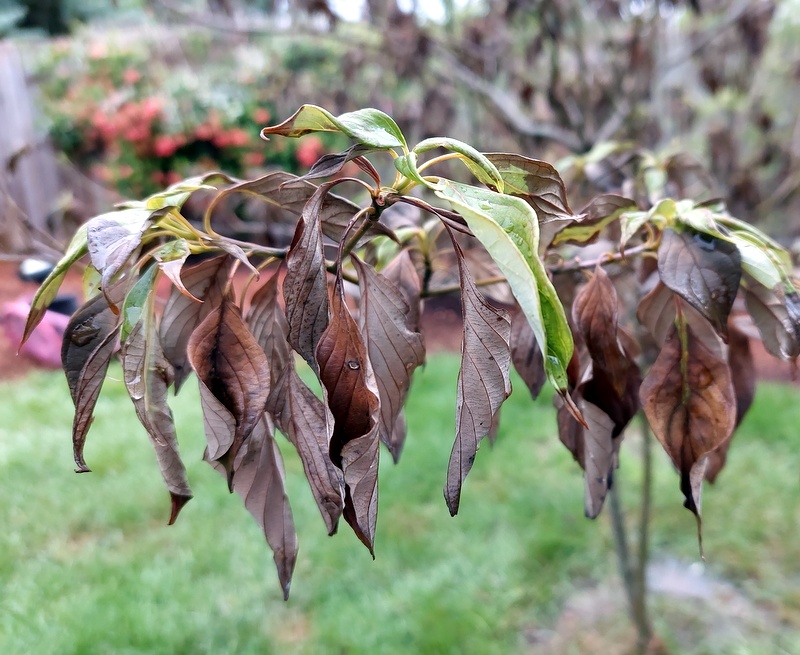
I'm a little worried about the pagoda dogwood. All the leaves have dried up. I confess that I don't keep a close eye on it - maybe it has done this before? I know it is not from lack of water; could it be its feet are too wet? Google has been no help at all.
Like yardeners everywhere, I am constantly considering what to plant next year. Of course, I don't want to interfere with the newly planted natives, but I am missing the splendor of giant sunflowers and butterfly attracting zinnias.
Have a contemplative week.
The berries on the winterberry holly will be red in winter, but are now turning from green to yellow to orange.
The 'Limelight' hydrangea blossoms are beginning to pink up, too. I'm glad I kept this shrub, as it gets more sun now and should grow less spindly.
Birdwise, my feeders are populated mostly by multiple families of sparrows, but I have seen a few "newcomers" like a lone mourning dove (where's your mate?!?) and a downy woodpecker. The hummingbirds appear to have left the area, despite the natural offerings in my yard.
I'm loving that honeysuckle vine and plan to add a couple more along the back fence. I just have to remember to keep it under control, now that its growing conditions have improved.
I'm a little worried about the pagoda dogwood. All the leaves have dried up. I confess that I don't keep a close eye on it - maybe it has done this before? I know it is not from lack of water; could it be its feet are too wet? Google has been no help at all.
Like yardeners everywhere, I am constantly considering what to plant next year. Of course, I don't want to interfere with the newly planted natives, but I am missing the splendor of giant sunflowers and butterfly attracting zinnias.
Have a contemplative week.
Labels:
hosta,
hydrangea,
pagoda dogwood,
progress report,
winterberry holly
Sunday, August 14, 2022
New mulch means new fungi
I was a bit worried I would not be able to keep ahead of the weeds in my newly landscaped beds, but so far, it's been relatively easy. Some are hand-pulled, some are sprayed. The yucca is proving to be rather recalcitrant, though. I hope it succumbs.
With three inches of mulch and a fair amount of rain, some new mushrooms have sprouted in the yard. Fun(gi) stuff.
Since we had some rain and the temperatures have moderated, I have backed off on all the watering. (Plus, sometimes at the end of the day, I am just too tired to drag a hose around.) Everything looks great, so I'm not too worried.
There is so much that goes on in one's yard that goes unnoticed. Like spiders and insects. On more than one occasion, my entire front yard has been covered with webs like the one below, visible only in the dewy morning light.
I can tell I am tired of summer, as I find myself looking forward to snow. Have a cool week.
With three inches of mulch and a fair amount of rain, some new mushrooms have sprouted in the yard. Fun(gi) stuff.
Since we had some rain and the temperatures have moderated, I have backed off on all the watering. (Plus, sometimes at the end of the day, I am just too tired to drag a hose around.) Everything looks great, so I'm not too worried.
There is so much that goes on in one's yard that goes unnoticed. Like spiders and insects. On more than one occasion, my entire front yard has been covered with webs like the one below, visible only in the dewy morning light.
I can tell I am tired of summer, as I find myself looking forward to snow. Have a cool week.
Sunday, August 07, 2022
IMHO part 2
I've been a (mostly) organic gardener for (most of) my adult life. Managing weeds organically requires a variety of methods and tools, and a lot of diligence. Between my hip replacement and shoulder replacement, I just could not keep up with the mechanical and manual efforts of weed control, so am now resorting to herbicides, to protect my investment in the new landscaping. I've made my peace with this change.
To save money, I have resorted to concentrates. These require a sprayer of some sort, and every time I want to use an herbicide, I have to mix some up. When I have just a bit to treat, though, I am not above applying the concentrate directly from the bottle, using a small brush. This method is actually recommended when treating something like grape vine or mulberry: cut back the plant and apply the concentrate directly to the cut stem.
Now I have a lot of areas to treat, to keep ahead of the weeds. For convenience sake, I have been purchasing ready-to-use Roundup, which comes with a variety of application methods. The first one I tried required pumping air into the container to create enough pressure to spray the herbicide. This is how my sprayer works, so I'm not unfamiliar with this kind of operation, but for some reason, I could not get much pressure built up inside the container. The second bottle of Roundup I purchased came with a battery operated sprayer. Using this one was much easier and effective. This is going to be my go-to method unless I find something even better to use.
I was hoping the sweet potato vine I planted on the front porch would climb the trellis there, but it only went so far, despite my efforts to direct it upward. My neighbor across the street reported similar frustrations with her sweet potato vine not vining very much. Next year I'll try something else in this location, but may still use some sweet potato vine in hanging baskets.
The black eyed Susan along the fence on the south side of the house is trying to choke out everything else growing there. I hope to rescue the few surviving coneflower plants; I think the ironweed can hold its own for a while, not sure about the aster. Susan is such a thug, something gardening catalogs don't usually point out. To be fair, ironweed can spread aggressively as well.
Lately, I've been experimenting with what I call Bento dishes - bento box meals served on a plate. Sometimes all I need for a particular recipe is a small handful of, say, green beans, but finding a place that sells loose green beans is a challenge. Farmers markets are also a challenge when it comes to timing and parking and crowds. So, after years of not growing vegetables, I have the urge to return to growing some of my own food. But in much smaller amounts. In containers. This will require some research and experimenting, two things I love to do.
About the only birds I see at the feeders these days are sparrows. There is the occasional housefinch, goldfinch, cardinal, blue jay, etc. but otherwise, not much diversity. I think I saw a northern mockingbird one day, and one of the landscape guys swore he heard cedar waxwing. Papa wren scolds me and Finn whenever we exit the front door, as there is a wren family in the house hanging in the maple tree. I'm looking forward to migration season, which may be closer than one thinks: a flock of geese flew overhead today, presumably heading south.
To save money, I have resorted to concentrates. These require a sprayer of some sort, and every time I want to use an herbicide, I have to mix some up. When I have just a bit to treat, though, I am not above applying the concentrate directly from the bottle, using a small brush. This method is actually recommended when treating something like grape vine or mulberry: cut back the plant and apply the concentrate directly to the cut stem.
Now I have a lot of areas to treat, to keep ahead of the weeds. For convenience sake, I have been purchasing ready-to-use Roundup, which comes with a variety of application methods. The first one I tried required pumping air into the container to create enough pressure to spray the herbicide. This is how my sprayer works, so I'm not unfamiliar with this kind of operation, but for some reason, I could not get much pressure built up inside the container. The second bottle of Roundup I purchased came with a battery operated sprayer. Using this one was much easier and effective. This is going to be my go-to method unless I find something even better to use.
I was hoping the sweet potato vine I planted on the front porch would climb the trellis there, but it only went so far, despite my efforts to direct it upward. My neighbor across the street reported similar frustrations with her sweet potato vine not vining very much. Next year I'll try something else in this location, but may still use some sweet potato vine in hanging baskets.
The black eyed Susan along the fence on the south side of the house is trying to choke out everything else growing there. I hope to rescue the few surviving coneflower plants; I think the ironweed can hold its own for a while, not sure about the aster. Susan is such a thug, something gardening catalogs don't usually point out. To be fair, ironweed can spread aggressively as well.
Lately, I've been experimenting with what I call Bento dishes - bento box meals served on a plate. Sometimes all I need for a particular recipe is a small handful of, say, green beans, but finding a place that sells loose green beans is a challenge. Farmers markets are also a challenge when it comes to timing and parking and crowds. So, after years of not growing vegetables, I have the urge to return to growing some of my own food. But in much smaller amounts. In containers. This will require some research and experimenting, two things I love to do.
About the only birds I see at the feeders these days are sparrows. There is the occasional housefinch, goldfinch, cardinal, blue jay, etc. but otherwise, not much diversity. I think I saw a northern mockingbird one day, and one of the landscape guys swore he heard cedar waxwing. Papa wren scolds me and Finn whenever we exit the front door, as there is a wren family in the house hanging in the maple tree. I'm looking forward to migration season, which may be closer than one thinks: a flock of geese flew overhead today, presumably heading south.
Labels:
black eyed susan,
progress report,
sweet potato vine
Wednesday, August 03, 2022
IMHO
Now that I've been watering (and watering and watering) post-installation, I'm discovering that the donut-shaped watering bags are not the time-savers I imagined them to be. While filling, they need babysitting to keep the water in the bag and not running out of the hole. Also, they block rain. So I am going to remove them from the shrubs.
The zippered watering pouches around the trees, however, are easier to manage. I can insert the hose and walk away, to deadhead flowering plants or fill birdfeeders. They don't work for shrubby plants, though, and are too tall for the hickory tree.
The plants are not only settling in but thriving (except for a few ragworts that get disturbed by Finn who thinks all that mulch is just a giant outdoor litter box). Some are even blooming, like the nodding onion and columbine.
And the ragwort is spreading, just like it should.
Last weekend, my daughter, granddaughter, and I went to Indianapolis to shop. Our first stop was Brickyard Ceramics, which has a field of wildflowers for a front yard. This photo doesn't do it justice.
I sowed more grass seed on bare areas in the lawn. After one round of Roundup, I've discovered that it doesn't work well on vines, just as the herbicide I have for vines doesn't work on other weeds. There is still some trumpet vine that needs to be erradicated, as well as some grape vine and poison ivy. The yucca and false indigo are popping up, unfortunately. And nutsedge is the bane of my lawn and nearby beds.
I updated the plant list for your viewing pleasure.
Today is HOT, HOT, HOT, but the next week or so promises to be milder, plus maybe rain. I'm ready for a break from watering.
The plants are not only settling in but thriving (except for a few ragworts that get disturbed by Finn who thinks all that mulch is just a giant outdoor litter box). Some are even blooming, like the nodding onion and columbine.
And the ragwort is spreading, just like it should.
Last weekend, my daughter, granddaughter, and I went to Indianapolis to shop. Our first stop was Brickyard Ceramics, which has a field of wildflowers for a front yard. This photo doesn't do it justice.
I sowed more grass seed on bare areas in the lawn. After one round of Roundup, I've discovered that it doesn't work well on vines, just as the herbicide I have for vines doesn't work on other weeds. There is still some trumpet vine that needs to be erradicated, as well as some grape vine and poison ivy. The yucca and false indigo are popping up, unfortunately. And nutsedge is the bane of my lawn and nearby beds.
I updated the plant list for your viewing pleasure.
Today is HOT, HOT, HOT, but the next week or so promises to be milder, plus maybe rain. I'm ready for a break from watering.
Labels:
columbine,
landscaping,
nodding onion,
roundleaf ragwort,
water
Subscribe to:
Posts (Atom)